Learn the trick, not the message
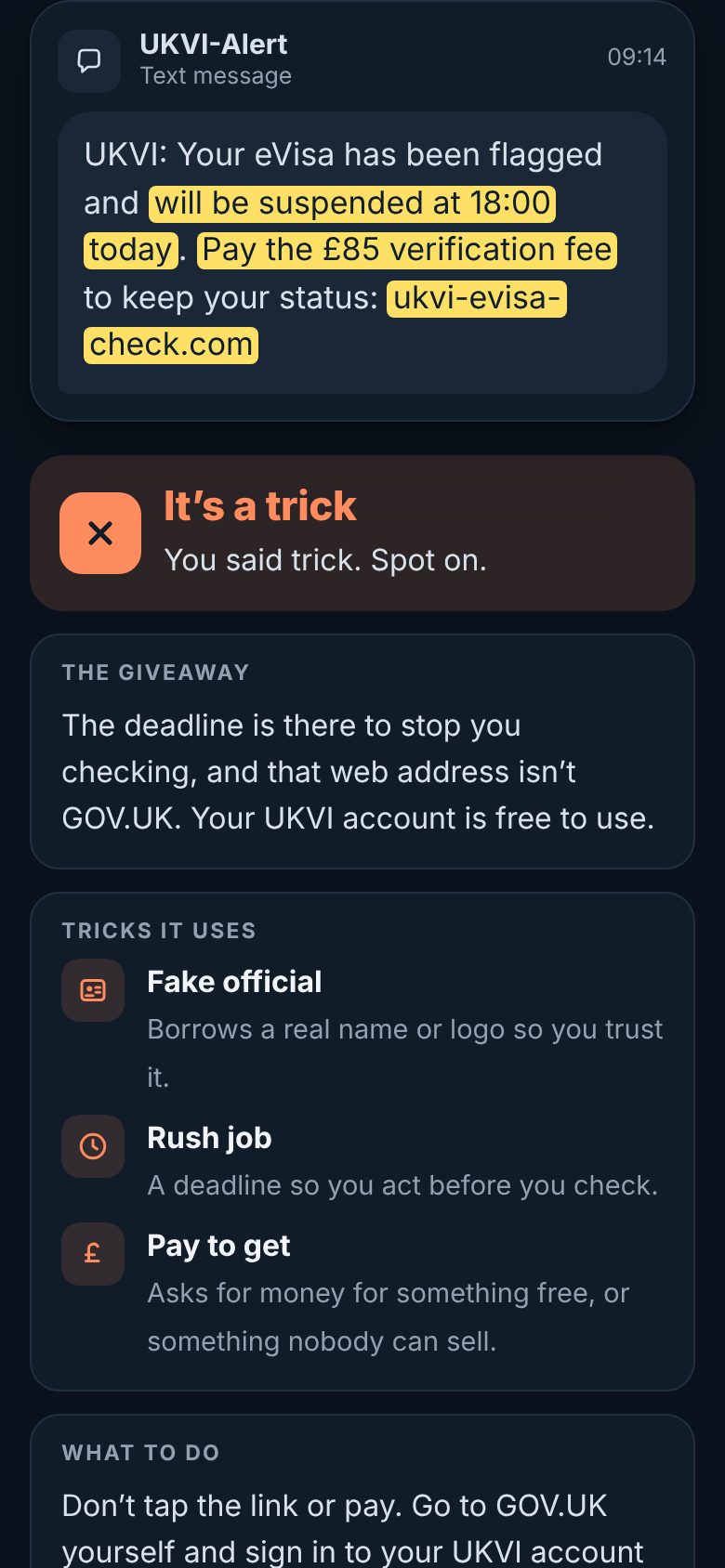
Every answer names the tricks behind it: fake officials, rush jobs, paying for something free, fear or anger, us and them, and no source. Once you know them, you spot them in messages you've never seen.
Free tool · Scams and rumours
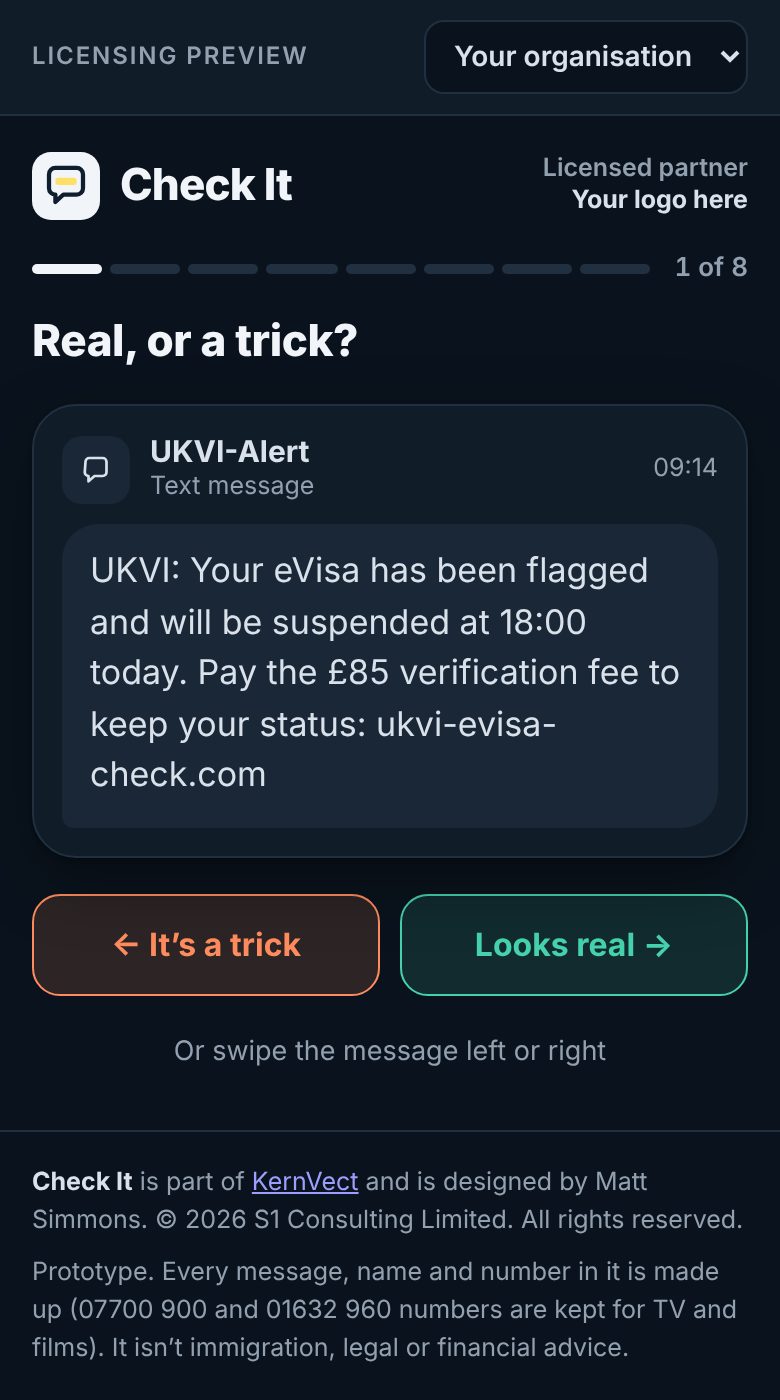
Scams and rumours go after people who are new to the UK. Check It shows eight messages like the ones people really get, a fake eVisa warning, a job that asks for a fee, a rumour in the family group, and asks one question: real, or a trick? Then it shows exactly how you can tell.
Try Check It Use it with your group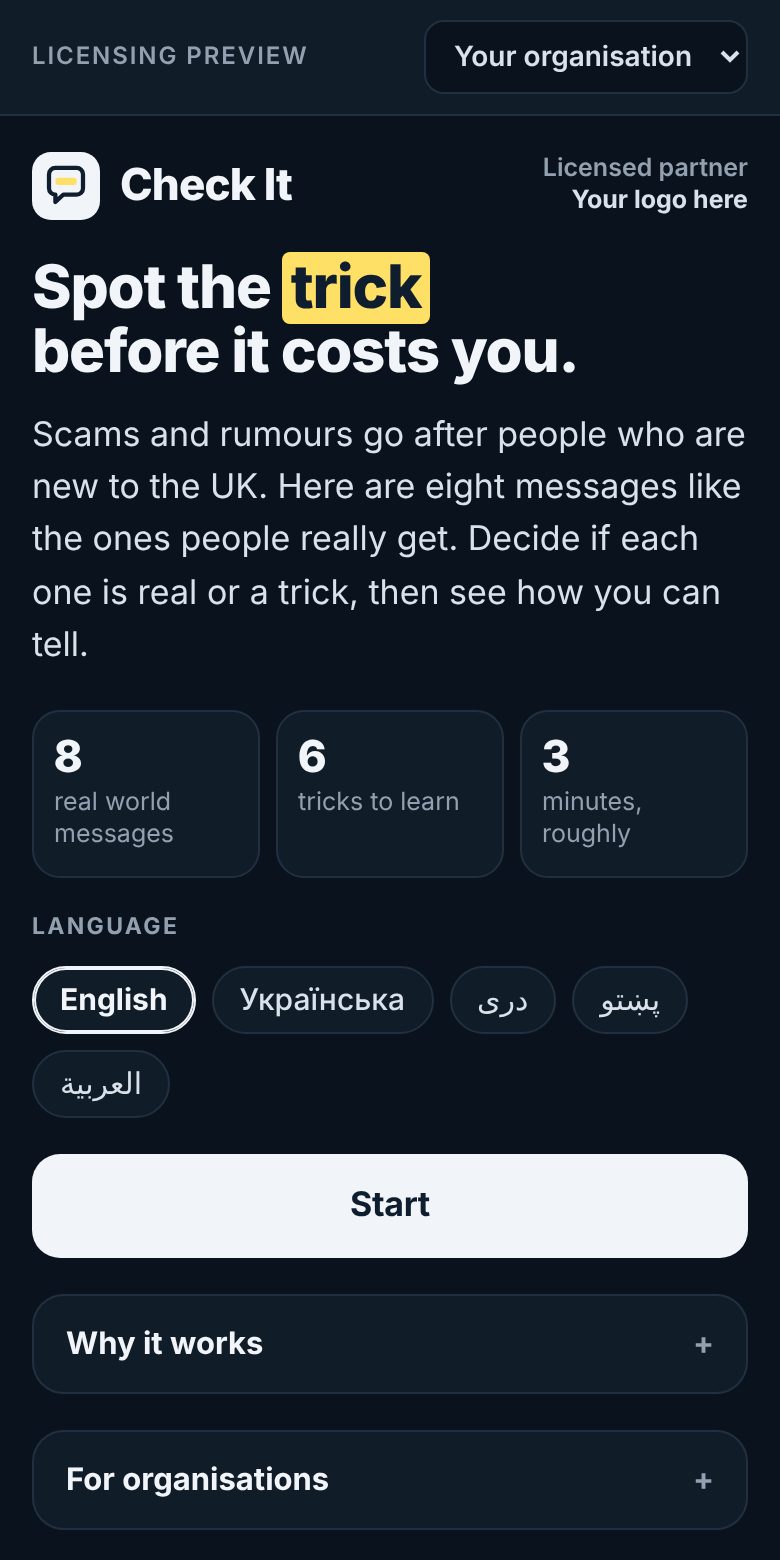
How it works
Every answer names the tricks behind it: fake officials, rush jobs, paying for something free, fear or anger, us and them, and no source. Once you know them, you spot them in messages you've never seen.
A real surgery text and a real school message are in there too. The lesson is check first, not trust nothing.
Every answer points to an official page, like GOV.UK or Citizens Advice, and to a real person to ask.
It follows the same prebunking research as Amplified. No answers are stored against anyone's name. Every message, name and number in it is made up, and it isn't immigration, legal or financial advice.
For organisations
Check It can be set up for a refugee charity, a council, a school or a library. Your organisation's name and contact details appear on every answer, so people know exactly who to ask. The messages can be drawn from the scams and rumours going round your area.
It's in English now. Ukrainian, Dari, Pashto and Arabic versions are being translated and checked by native speakers, never by machine.